
A New Scientific Research Hub
We envision being the world’s leading center for Ice Age science and its relevance to our modern climate and biodiversity crises. The Samuel Oschin Global Center for Ice Age Research will be the intellectual core of La Brea Tar Pits, studying how ancient ecosystems responded to climate change and extinction events, and what those lessons mean for us today.
“There is no place on Earth like La Brea Tar Pits. It is fitting to honor my husband Samuel Oschin’s legacy by supporting science and research in the heart of Los Angeles, a city he helped to develop and shape,” said Lynda Oschin, Chairman of the Board and Secretary of the Mr. and Mrs. Samuel Oschin Family Foundation. “Sam and I started the foundation in order to inspire future generations by supporting organizations that deepen our understanding of the world around us. Through this work, I know the lessons of Ice Age Los Angeles will inspire countless scientists and young students here and globally.”
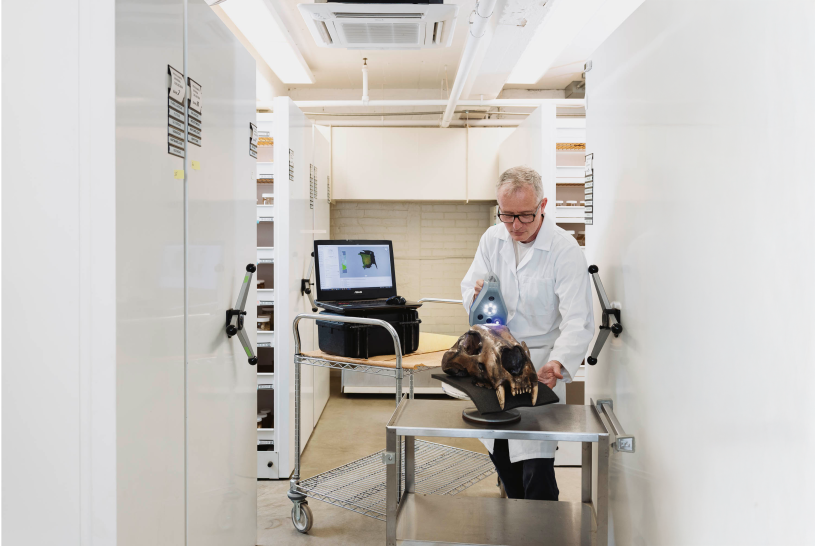
The Samuel Oschin Global Center for Ice Age Research encompasses research, excavation, scientific analysis, academic publishing, and collections management. The new center's impact and work will be woven into the landscape of Hancock Park, integrated into the museum, and infused into every Tar Pits program, driving the visitor experience and reaching global audiences. Indigenous communities within the Los Angeles Basin will serve as integral co-developers of exhibitions and educational programs.
An Active Field Site
The Tar Pits’ unique geologic conditions have led to exceptional preservation of Ice Age fossils over 60 millennia. Ongoing excavations, spanning more than a century and projected to continue for decades, have yielded more than 3.5 million specimens. This ongoing work helps us to understand past environments, develop strategies for adapting to climate change, train new scientists, and educate K–12 students, along with visitors to the site.
Interdisciplinary World-Class Research at La Brea Tar Pits
The Tar Pits’ rich fossil record attracts scientists, postdoctoral researchers, graduate, and undergraduate students globally. In addition, our team travels to tar seeps around the world to conduct groundbreaking, collaborative research, train local scientists on excavation and fossil preparation techniques, and build scientific capacity and cultural patrimony in underresourced regions.
Read about Spea labreae, a New Species of Ice Age Toad Discovered at La Brea Tar Pits
The Samuel Oschin Global Center for Ice Age Research's Incomparable Collections
The Samuel Oschin Global Center for Ice Age Research is home to the world’s richest Ice Age fossil collection. Famed for more than a century for its unparalleled collections of Ice Age carnivores and birds, collections continue to grow with recent efforts focusing on plants, insects, fish, amphibians, reptiles, and small mammals, many of which still live in Los Angeles today. These new finds offer vital insights into past climate shifts and how species responded to environmental change.
Innovation and Preservation
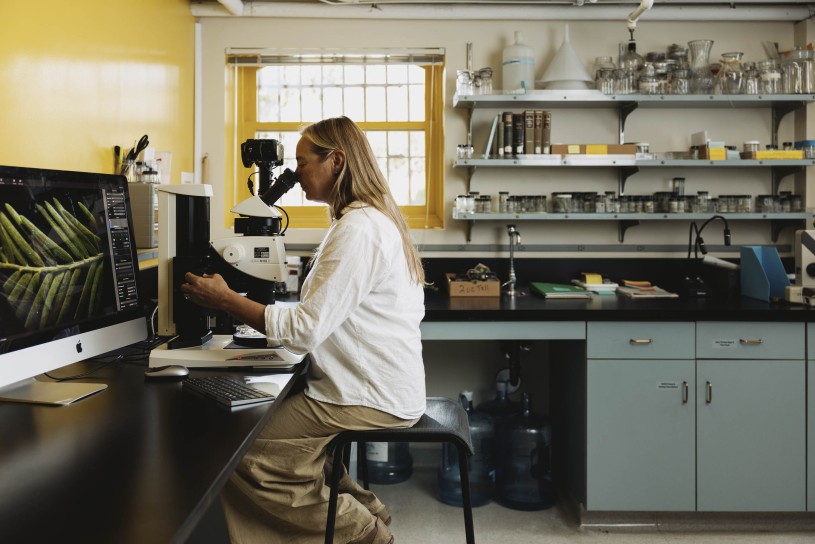
The fossils found at La Brea Tar Pits are preserved to such a degree that the compounds necessary for radiocarbon dating and other geochemical and biomolecular analyses are available to researchers. Scientists at the Samuel Oschin Global Center for Ice Age Research are developing and using new methods for recovering ancient proteins and DNA, creating climate and extinction models, and building digital fossil archives and new tools for ecological reconstruction.